Saudi–Viet Nam Investment Partnerships: A New Chapter in Bilateral Cooperation
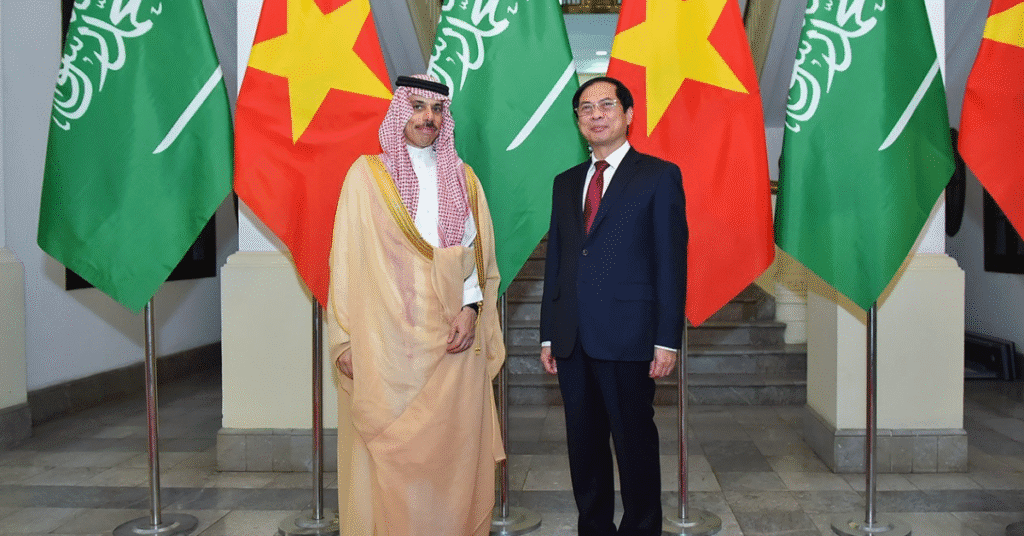
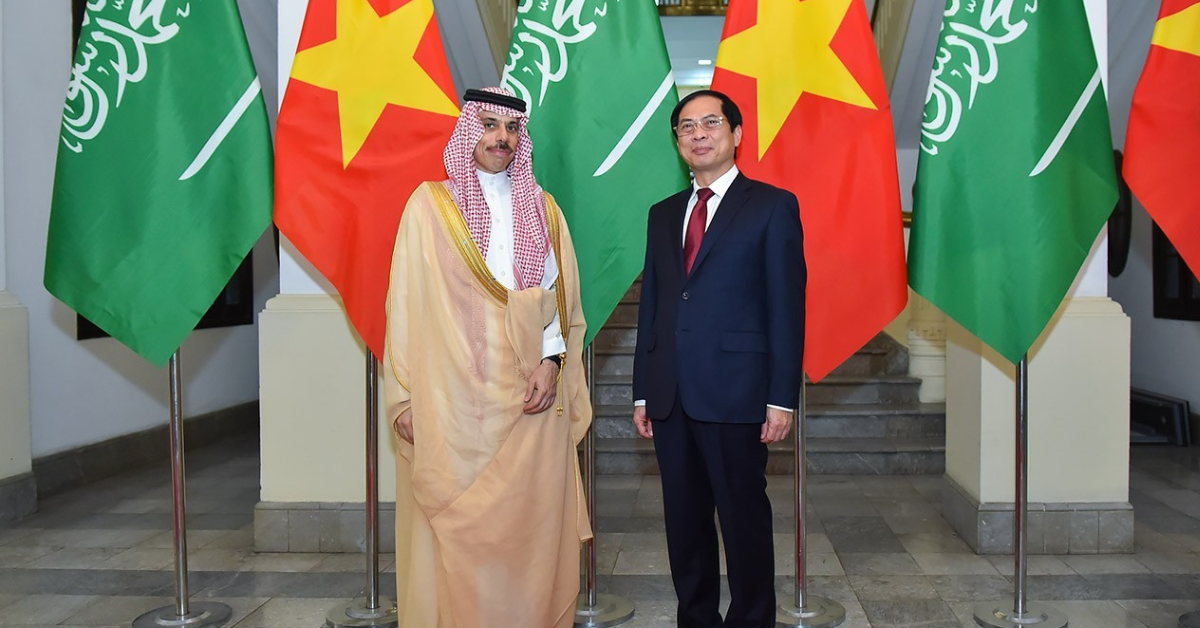
The official visit of Minister of Industry and Mineral Resources Bandar Alkhorayef to Ha Noi in September 2025 marked a significant step forward in Saudi–Viet Nam economic relations. The discussions and agreements signed during the visit underscore a growing commitment to deepen bilateral cooperation, moving beyond traditional diplomatic ties towards more concrete economic partnerships.
As of 2024, Saudi Arabia’s cumulative investment in Viet Nam stood at approximately US$1.92 billion [1]. This figure reflects not only the scale of existing engagement but also the potential for further expansion as both countries look to diversify economic links across multiple sectors and strengthen their presence across Asia and the Middle East.
What Was Signed: Key Agreements and Sectors

During the visit, the two sides signed five memoranda of understanding (MoUs) covering a diverse range of sectors: construction, infrastructure development, advanced furniture manufacturing, vocational training, and tourism [2] [3]. These agreements indicate a shift towards more practical cooperation, with emphasis on both heavy industries and consumer-facing sectors that can generate employment and skills transfer.
In addition to the MoUs, the Viet Nam Association of Foreign-Invested Enterprises (VAFIE) was reported to have discussed potential areas of collaboration with the Saudi Ministry of Industry and Mineral Resources — including energy, agriculture, logistics, and industrial cooperation — as part of broader dialogues aligned with Viet Nam’s FDI strategy and Saudi Arabia’s Vision 2030 diversification goals [2].
While these MoUs mark important commitments, translating them into operational projects will require overcoming regulatory complexities, aligning timelines, and mobilising both public and private stakeholders.
The role of the Saudi–Viet Nam Business Council was also underlined, providing a channel for private sector engagement. Beyond government-level commitments, the council acts as a practical platform to connect enterprises, explore joint ventures, and address operational issues that can accelerate the implementation of bilateral projects.
Strategic Drivers Behind the Partnerships
The agreements signed in Ha Noi cannot be seen in isolation; they reflect deeper structural shifts in both economies.
For Saudi Arabia, the partnerships align closely with Vision 2030, the kingdom’s long-term strategy to diversify its economy, reduce reliance on oil, and expand into new industries such as mining, advanced manufacturing, and logistics [4]. By engaging with Viet Nam, Saudi Arabia gains access to a dynamic manufacturing hub, a young workforce, and established networks within ASEAN.
From Viet Nam’s perspective, the drivers are equally clear. The country offers political stability, a consistent pro-investment policy framework, competitive labour costs, and a growing consumer market [5]. Its positioning within ASEAN, combined with a dense network of free trade agreements, makes Viet Nam an attractive gateway for investors seeking regional reach. The presence of a skilled and increasingly internationalised workforce also addresses Saudi Arabia’s need for partners capable of meeting high production and quality standards.
However, despite strong strategic incentives, both sides face notable challenges. Saudi Arabia must carefully balance Vision 2030 priorities with ongoing domestic restructuring, while Viet Nam must navigate regulatory complexity and competition from other ASEAN states — factors that could slow the pace of cooperation.
Equally important is the growing role of the private sector. While bilateral ties have traditionally been shaped at the government level, the involvement of business councils and SMEs signals a shift towards more diversified and practical forms of cooperation. This is crucial for ensuring that agreements signed at the political level are translated into tangible projects and opportunities on the ground.
Implications for Viet Nam’s Business Community and SMEs

These structural drivers set the stage for tangible implications on Viet Nam’s SMEs and wider business community.
For Viet Nam businesses—especially SMEs—the agreements open up both immediate and long-term opportunities. Construction, furniture manufacturing, vocational training, and tourism are sectors where local companies could directly participate in new projects or form joint ventures with Saudi partners. In the longer run, Saudi Arabia can also serve as a gateway for Viet Nam firms seeking to expand into the broader Middle Eastern market.
However, opportunities will come with new demands. Saudi partners typically operate with high standards in technology, quality, and compliance. Viet Nam firms—many of which still face structural constraints—will need to upgrade processes and adopt more rigorous standards. Logistics and infrastructure also remain a bottleneck when it comes to scaling exports, while skills gaps in advanced manufacturing and service delivery must be addressed through training and international cooperation.
The key insight is that Saudi capital should not be viewed only as financing. For Viet Nam SMEs, it represents a chance to enhance capabilities, integrate into higher-value supply chains, and align more closely with global market expectations.
Outlook: What to Watch Next

The real test will be how quickly the five MoUs move from paper to practice. Investors and firms alike will watch for concrete project launches, the pace of capital inflows, and whether early wins can set momentum for deeper Saudi–Viet Nam cooperation.
At the regional level, these ties fit into a larger trend: the Middle East looking East, and ASEAN looking West. A Saudi–Viet Nam partnership could become a keystone in a wider Middle East–ASEAN nexus, complementing energy, logistics, and investment corridors already taking shape.
Key metrics to watch include the volume of capital inflows, the number of joint ventures formed, and the growth of Saudi–Viet Nam supply chains. Beyond economics, this partnership could reshape Middle East–ASEAN trade patterns over the next decade, positioning both nations as central players in a rapidly evolving global trade landscape.
The ripple effects may reach beyond bilateral channels. Closer Saudi–Viet Nam supply chains can eventually extend to the GCC, ASEAN, and even Europe. The UK, already one of Saudi Arabia’s largest trading partners in Europe, stands to benefit indirectly—through triangular cooperation or by plugging into expanded value chains that link Saudi capital with Viet Nam production.
For Viet Nam businesses, especially SMEs, the action points are clear:
- Stay engaged via the Saudi–Viet Nam Business Council and sector-specific working groups.
- Prepare to meet higher standards in technology, compliance, and sustainability to align with Saudi and global market requirements.
- Diversify partnerships—not only with Saudi firms but also with other ASEAN and international players likely to join future projects.
Conclusion
The Saudi–Viet Nam agreements highlight the growing strategic depth of Viet Nam’s international economic partnerships, while positioning the country more firmly within the Middle East–ASEAN nexus. For Viet Nam, they open new FDI opportunities and market access, but also underline the need to upgrade competitiveness in technology, compliance, and workforce skills.
Ultimately, the real test lies in execution. Sustained dialogue and effective implementation will decide whether SMEs and the wider business community gain lasting benefits beyond capital inflows. If implemented effectively, the Saudi–Viet Nam partnership could emerge as a model for Middle East–ASEAN economic cooperation in the coming decade.
References
[1] Saudi Ministry of Industry and Mineral Resources. Saudi investments in Viet Nam. 2024. Available at: https://www.industry.gov.sa/en
[2] Saudi Gazette. Saudi Arabia, Viet Nam sign five MoUs to strengthen cooperation. September 2025. Available at: https://saudigazette.com.sa
[3] Arab News. Saudi Minister Bandar Alkhorayef visits Ha Noi, agreements signed in key sectors. September 2025. Available at: https://www.arabnews.com
[4] Vision 2030 Kingdom of Saudi Arabia. Overview and Economic Diversification Goals. Available at: https://www.vision2030.gov.sa
[5] World Bank. Viet Nam Economic Update. 2024. Available at: https://www.worldbank.org/en/country/vietnam