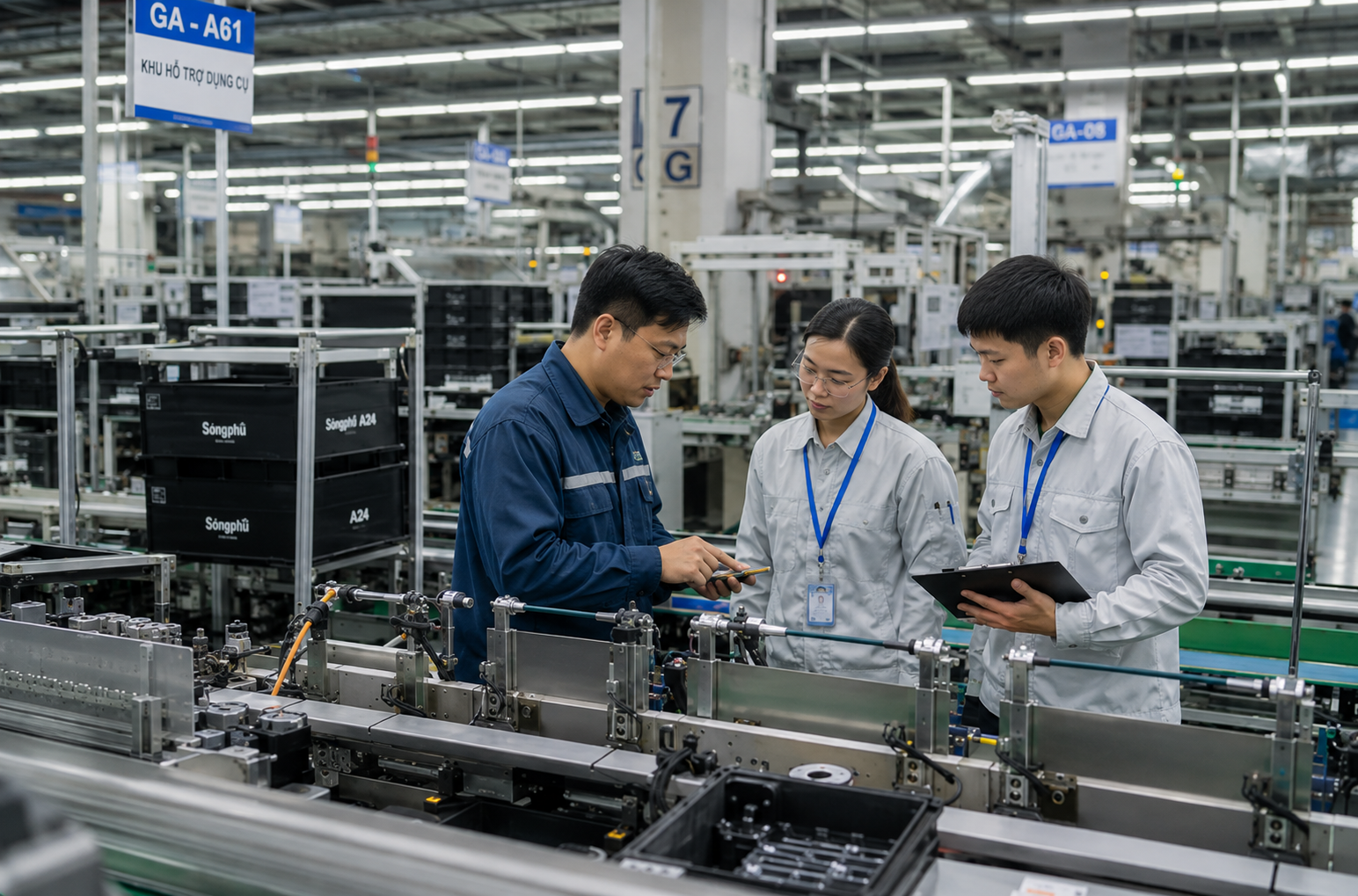
Manufacturing decisions are increasingly shaped by how countries connect to one another, not simply by what each market can produce on its own. ASEAN’s Economic Community Strategic Plan 2026–2030 sets out a vision for a more integrated regional production centre, with stronger global supply-chain linkages and greater cooperation across industries [1].
For businesses assessing manufacturing and sourcing opportunities in Southeast Asia, this changes the question. Instead of asking only “Why Viet Nam?”, a more useful question is: How does Viet Nam fit into ASEAN’s wider manufacturing ecosystem?
Manufacturing is becoming regional
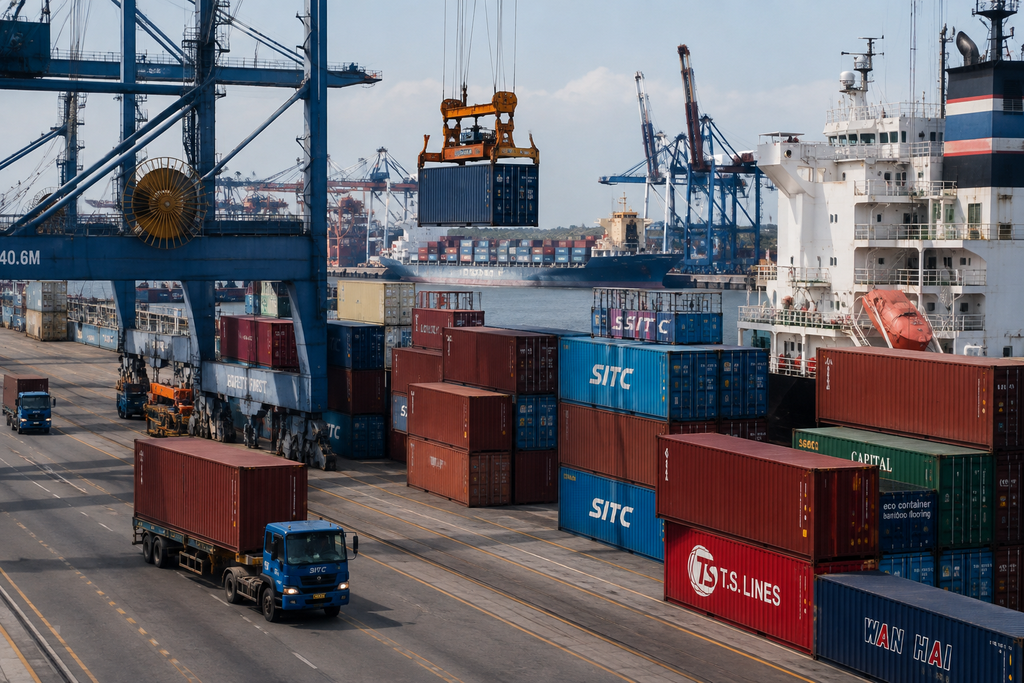
Modern production rarely stops at a national border. Components, materials, processing, assembly, testing and logistics can be distributed across several markets, with each location contributing different capabilities to the same value chain.
ASEAN’s 2026–2030 economic strategy explicitly aims to strengthen the region’s position as a globally competitive production centre, increase intra-ASEAN trade and investment, and deepen global supply-chain linkages. It also identifies advanced industries and technologies as important sources of future competitiveness.
This matters for sourcing decisions because the strongest manufacturing location is not necessarily the one that can perform every stage of production. It may instead be the location that connects efficiently with suppliers, customers, infrastructure and specialist capabilities elsewhere in the region.
For an international business, therefore, evaluating a market in isolation can miss part of its strategic value. A sourcing decision needs to consider both what a country can produce and how well it connects to the production network around it.
ASEAN is building complementary manufacturing capabilities
A regional manufacturing ecosystem does not mean every country produces the same goods. Instead, different markets are developing complementary capabilities across the same value chain.
The semiconductor industry illustrates this well. ASEAN’s recent investment strategy highlights cooperation across the regional semiconductor supply chain, including initiatives linking countries such as Malaysia and Singapore. Viet Nam is also expanding its role in semiconductor assembly, testing and packaging. This creates a network in which businesses can combine capabilities across markets rather than rely on a single production base.
For sourcing decisions, the value of an individual market therefore depends partly on what it can contribute to – and connect with – across the wider ASEAN ecosystem.
Viet Nam’s opportunity is its position within the network
Viet Nam is strengthening its role within this regional manufacturing landscape. The country attracted US$34.65 billion in registered foreign direct investment in the first half of 2026, up 61% year on year [2].
The scale of investment is important, but the composition is equally relevant to sourcing decisions. Continued investment in manufacturing adds production capacity and strengthens the ecosystem of suppliers and supporting businesses around it.
Viet Nam is also part of the wider ASEAN semiconductor supply chain, alongside other regional markets involved in assembly, testing and packaging. This reinforces the idea that Viet Nam’s manufacturing opportunity should be considered in the context of regional production networks rather than as a standalone market.
For international businesses, this can change how Viet Nam should be assessed. Production costs and capacity still matter, but so do supplier depth, access to supporting industries, logistics, technical capabilities and the ability to connect with complementary operations elsewhere in ASEAN.
The strategic value of Viet Nam therefore lies not only in what can be produced domestically, but in where the country can connect a business to the wider regional value chain.
The better sourcing question is not “Why Viet Nam?”
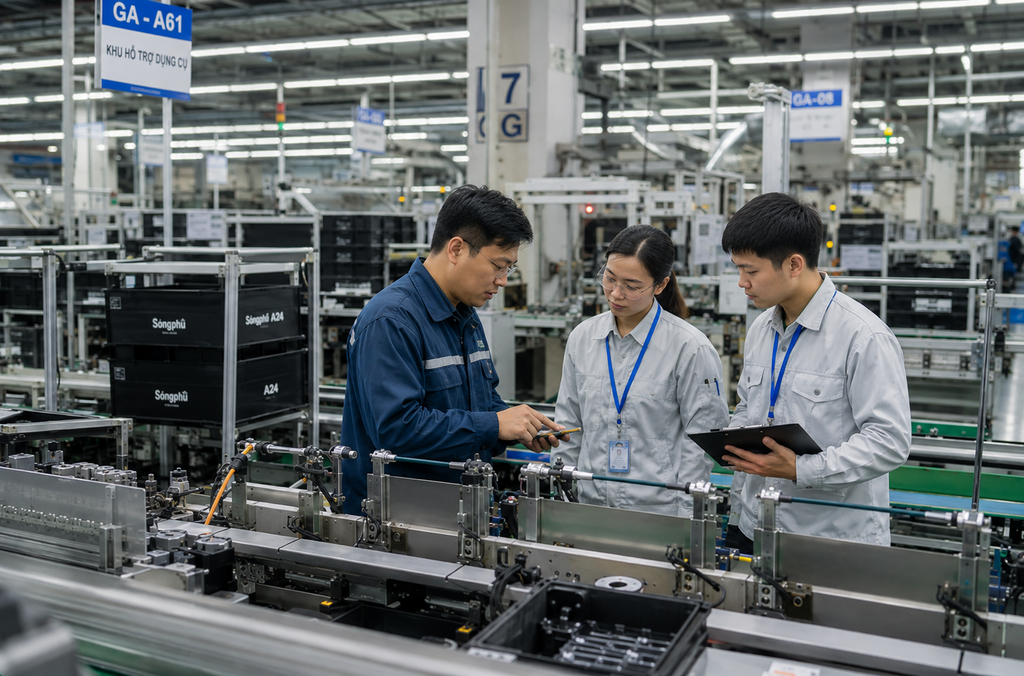
For businesses, the shift towards regional manufacturing changes how sourcing decisions should be approached. Instead of assessing Viet Nam in isolation, companies need to consider:
- What capabilities does Viet Nam offer?
- Which regional suppliers and production networks can it connect to?
- Where can its capabilities complement other ASEAN markets?
This is where direct market engagement becomes valuable. Viet Nam International Sourcing Expo 2026 brings international buyers together with Vietnamese manufacturers and suppliers, creating an opportunity to assess capabilities and build partnerships within the wider regional ecosystem. The event will take place from 3-5 September 2026 at SECC, Ho Chi Minh City.
For companies exploring Viet Nam as part of a wider ASEAN sourcing strategy, the value of an event like this is not simply finding a supplier. It is creating an opportunity to test the assumptions behind a sourcing strategy through direct conversations with businesses operating in the market.
References
[1] ASEAN, ASEAN Economic Community Strategic Plan 2026–2030
[2] National Statistics Office of Vietnam (2026), Report socio-economic performance in second quarter and the first half of 2026, 3 July 2026.